What Actually Compounds in Growth Work
-
 by Ben Liau
- August 27, 2026
- Growth Marketing
- 0

The most valuable thing experience buys you in growth work isn’t a bigger playbook. It’s a shorter one.
The junior version of expertise is knowing a hundred tactics. The senior version is knowing which three of them matter for the problem in front of you, and which ninety-seven are a waste of the quarter. That second skill looks like less, fewer ideas, fewer experiments, a smaller list, and it’s worth far more, because most of the cost in growth isn’t the thing you do. It’s the six things you did that were never going to work.
What compounds, in other words, isn’t the tactics. It’s the judgment about which ones to skip. And that’s the asset the industry is worst at valuing.
Two assets, moving in opposite directions
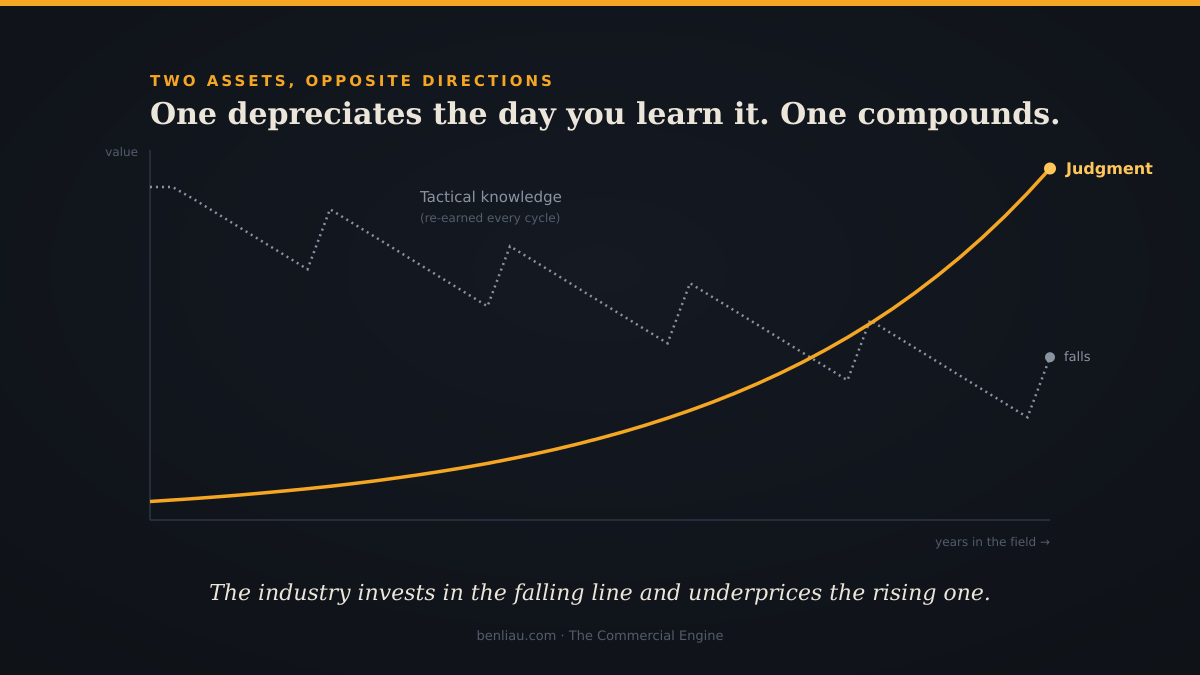
There are two different things you can accumulate in a growth career, and they behave nothing alike.
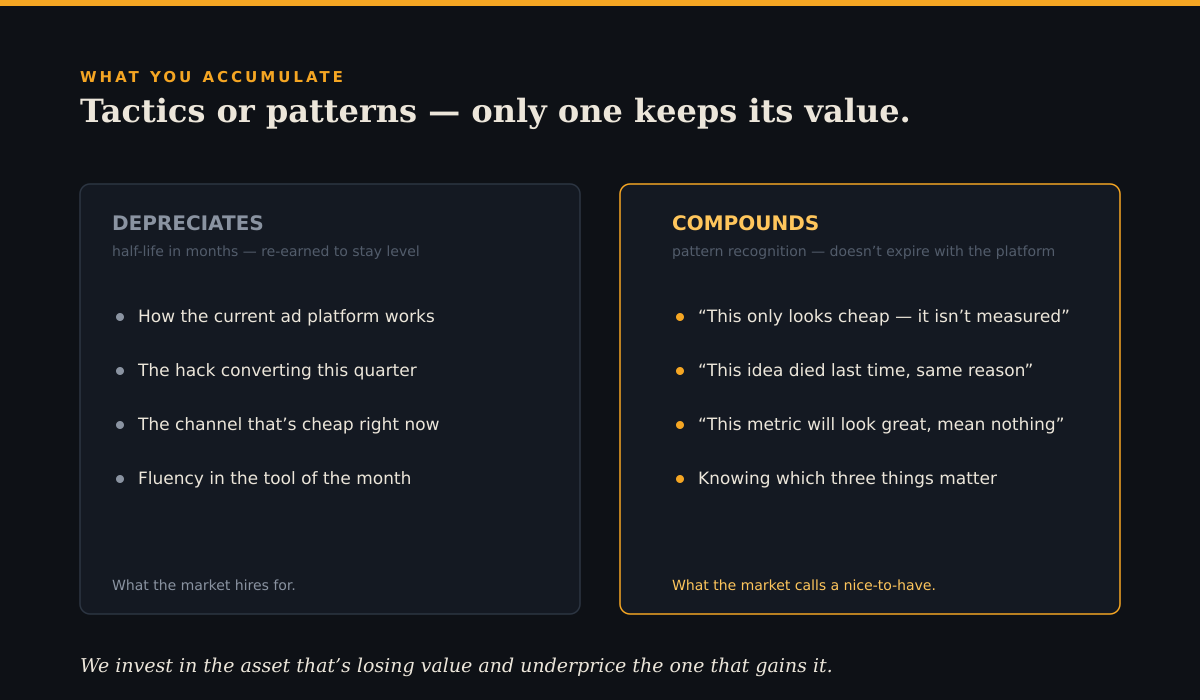
The first is tactical knowledge, how the current ad platform works, the hack that’s converting this quarter, the channel that’s cheap right now, fluency in whatever tool just ate the category. This is real and useful, and it starts depreciating the day you learn it. The platform ships a new algorithm, the hack gets saturated, the tool gets replaced. Tactical knowledge has a half-life measured in months, and you have to keep re-earning it just to stay level.
The second is pattern recognition, the ability to look at a plan and recognise the shape of something you’ve seen before. This channel looks cheap because it isn’t being measured properly. This “new” idea is the one that died at your last company for a reason that still applies. This metric is going to look great and mean nothing. That asset doesn’t depreciate. It compounds, because every cycle adds another pattern to the library, and the patterns don’t expire when the platform does.
Here’s the mismatch. The industry pours its attention into the depreciating asset, the certifications, the “latest playbook,” the tool of the month, and barely has a word for the compounding one. We hire for recent tactical knowledge and call experience a nice-to-have, which is exactly backwards. We’re investing in the thing that’s losing value and underpricing the thing that gains it.
This isn’t a knock on the young
And to be clear, this is not the usual old-guard complaint about kids these days. The sharp 25-year-old growth marketer is genuinely good at things I’m not.
They run more experiments, move faster, and pick up a new platform in a weekend while I’m still reading the changelog. They haven’t accumulated the scar tissue that makes you hesitate, so they try the thing that shouldn’t work, and sometimes it does, because the market moved and the old rule stopped being true. That energy is not a junior version of judgment. It’s a different and real strength, and a good team needs it.
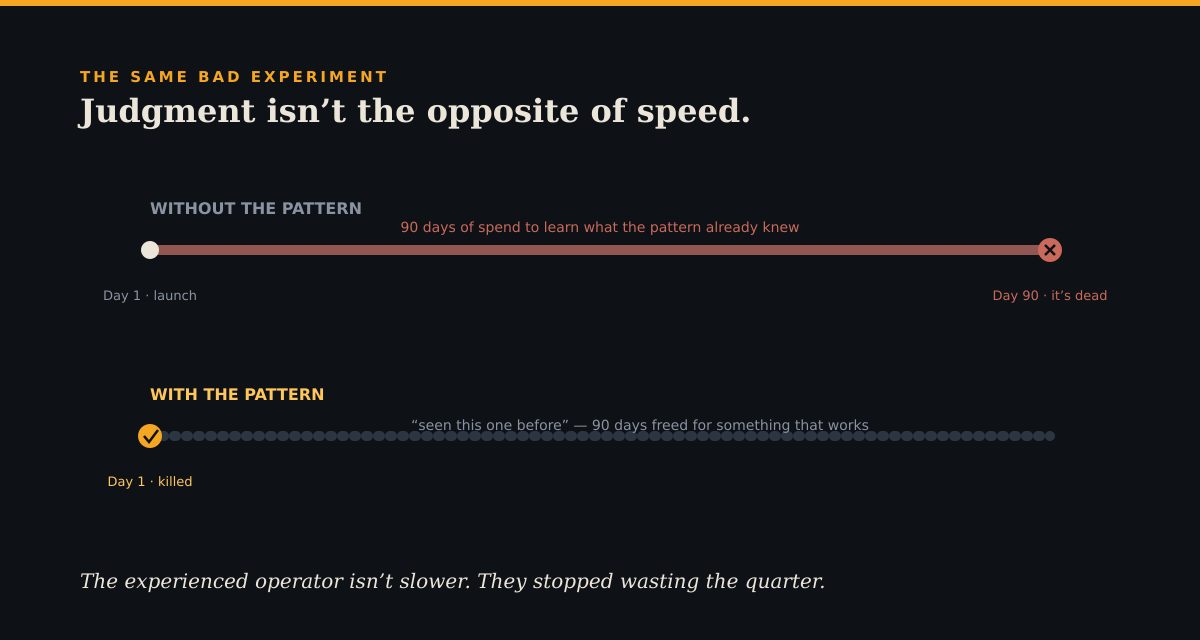
The one thing they can’t do yet is kill the bad experiment on day one instead of day ninety. Not because they’re less smart, because they haven’t watched that exact idea die twice before, and you can’t shortcut that. It’s pattern-debt, and the only way to pay it down is reps over time.
Which reframes the whole thing. Judgment isn’t the opposite of speed. It’s what stops speed from getting expensive. The fast operator who also knows which experiments not to run isn’t slower, they’re the fast operator who stopped wasting three months a year on ideas that were dead on arrival. Experience doesn’t replace the hunger. It aims it.
Why it gets priced backwards
So why does the industry keep underpaying for the thing that compounds? Because judgment is invisible, and activity is not.
Everything the tactician does leaves a trace. Experiments shipped, channels launched, campaigns live, it all shows up, gets counted, goes in the deck. Judgment produces the opposite kind of evidence: the experiment that didn’t run, the budget that wasn’t burned, the quarter that didn’t get wasted on a dead idea. Its whole output is things that didn’t happen. You cannot put “disasters avoided” on a dashboard, and you certainly can’t screenshot it for the board.
This is the same blind spot that makes bad webinars and vanity dashboards survive: the work that photographs well gets funded, and the work that quietly prevents waste goes unrewarded because nobody can see it. An operator who talks you out of three expensive mistakes a year has created enormous value and generated no visible artefacts. An operator who ran thirty experiments has a full dashboard and may have created nothing. Guess which one reads as productive.
So the market does the natural thing and pays for what it can see. It rewards the longest list of recent tactics, because that’s legible, and it treats the shorter, sharper playbook, which is the actual product of a decade of judgment, as though it were just being less busy.
What to do with that
If judgment is the asset that compounds, then two things follow, one for how you grow, one for how you build.
For the operator: stop treating experience as a tally of tactics and start treating it as compression. The goal of another year in the field isn’t a longer list of things you’ve tried; it’s a shorter list of things worth trying, arrived at faster. You build that by studying why things died, not by running more of them. The post-mortem on the campaign that failed is worth more to your future self than the three new tools you could have learned in the same hour, because the tools will be obsolete and the pattern won’t. Most people skip the post-mortem because it isn’t fun and nobody’s watching. That’s precisely why it compounds.
For the team, this is where it meets the bigger shift. As AI gets better at the tactical layer, drafting, assembling, running the mechanical experiments, the depreciating asset gets cheaper by the month. The thing it can’t yet do is decide which experiments are worth running at all, and recognise the dead idea before ninety days of spend proves it dead. That’s judgment, and it’s about to be the scarcest input in the system. A small team of high-judgment operators pointing AI at the right problems will out-produce a big team running the wrong experiments faster than ever. The constraint stops being how much you can do. It becomes how well you can choose.
For a decade the growth world has paid for the longest list of tactics, on the quiet assumption that doing more is the same as knowing more. AI is about to make that assumption expensive, because it can do more than any list, instantly, for almost nothing.
What it can’t do is choose. And choosing well, knowing what not to run, spotting the dead idea early, holding the shorter playbook, is the one thing in this field that has always compounded and is about to be the only thing that does. The industry is still paying for the asset that depreciates. That’s the opportunity.
Frequently asked
Does experience still matter in growth marketing?
More than ever, but not the part people think. Tactical knowledge, the current platform, the latest hack, depreciates fast and has to be re-earned constantly. What experience actually buys is pattern recognition: knowing which ideas will waste the quarter before you spend it. As AI makes tactics cheap, that judgment becomes the scarce input, not a nice-to-have.
What actually compounds in a marketing career?
Judgment about what to skip. Every cycle adds a pattern to your library, the channel that only looked cheap, the “new” idea that died for a reason that still applies, and those patterns don’t expire when the platform does. You build the asset by studying why things failed, not by running more things. The output is a shorter, sharper playbook, arrived at faster.
Are growth hackers overrated?
No, mispriced. A sharp young operator runs more experiments, moves faster, and learns new platforms quicker, and that’s real value a team needs. What they haven’t accumulated yet is the judgment to kill a bad experiment on day one instead of day ninety, because that only comes from reps. The mistake isn’t overrating them; it’s underrating the judgment layer that aims all that speed.